As an aspiring architect and recent graduate, my main interests within the field are socially and environmentally aware architectural solutions, with a focus on sustainability and computational design processes. I have participated in numerous design competitions and have recently gained interest in computational design. Following my graduation with a first class degree from the BSc (hons) Architecture course I worked on several different projects between stages 0-4 in my year out. I am deeply passionate about socially responsible and community-driven architecture and urbanism that suits its geographic and social contexts. My professional aspirations lie in creating architectural solutions that prioritise end-users and embrace sustainable design practices and building optimisation from the outset.
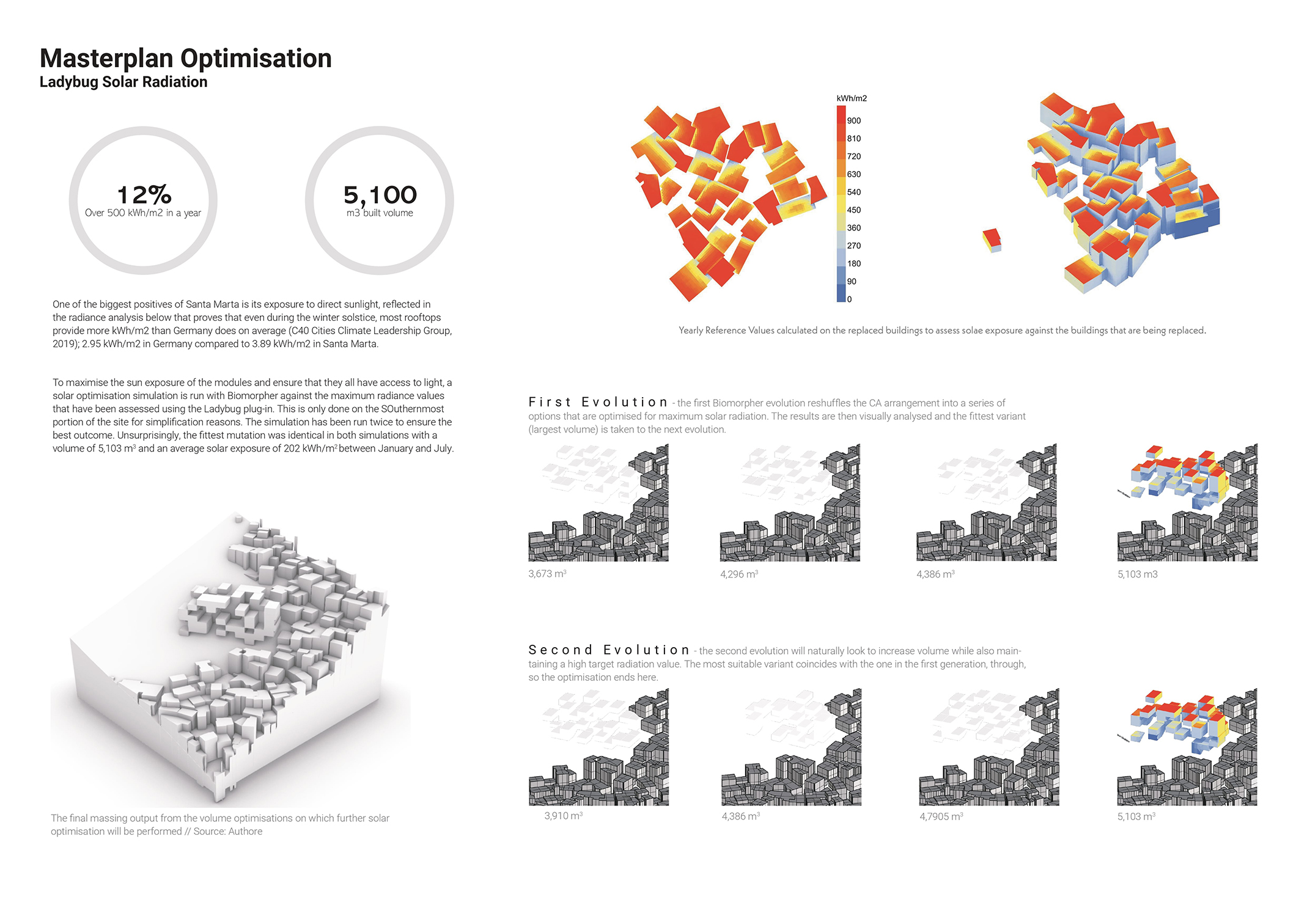
Favelas are renowned for their high levels of solar radiation due to the topography and low-rise construction. To avoid overshadowing in the new proposal, the form had to be optimised against solar radiation.
Modular Favelas - Site Plan and Internal View
The interstitial spaces between the modules are intended for the provision of public outdoor spaces and and increased level of vegetation.
Modular Favelas - Physical Models
The materiality of the proposal is a key in its integration on site. Additionally, as many materials will be recovered from the demolished buildings to preserve the authenticity of favela design.
Modular Favelas - South Elevation
The CEllular AUtomata form finding process is a testament to the natural patterns of expansion noticed in Santa Marta's urban grammar.
Modular Favelas - The Superstructure
The steel superstructure acts like a skeleton for the modules to be placed on with the possibility of future vertical and horizontal expansion.
Modular Favelas - Full Optimisation Process
By employing a series of computational tools, the optimal arrangement of modules to maximise their number, but maintain good connectivity, access routes and environmental performance (sun exposure, daylight) is achieved.