MYLES BROOM
Architecture (MArch) 2026

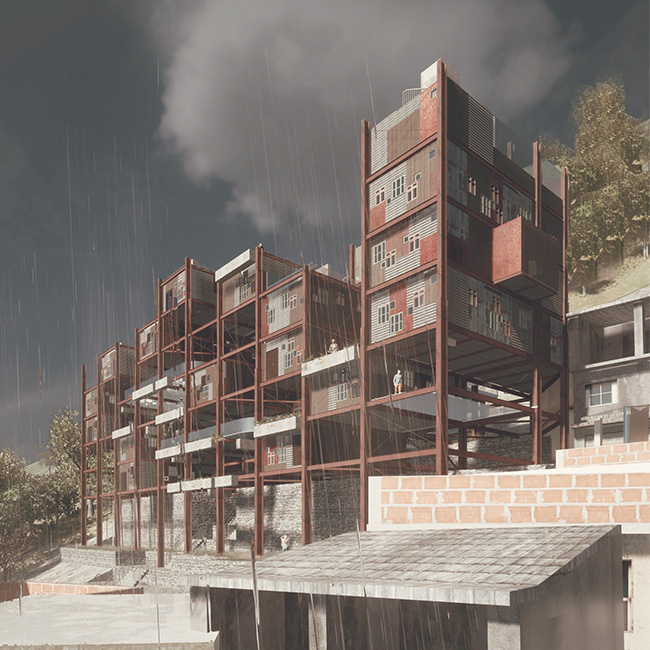
If sustainable architecture has been a professional aim for a while, following global warming and the climate crisis, it has now become imperative to approach these issues. Our world keeps evolving, so education is required to reassess our challenges. Further on, recent demands to the profession remain pending to be tackled. Topics such as the #BlackLivesMatter awakening and the coming to terms with place identities, the ways Covid19 legacies evidence social inequalities as well as tackle the need for healthier and happier cities, the marginalisation of communities by gentrification, the scarcity of affordable housing, and the challenges of the
The graduating MArch students developed one among three focused studio briefs. The first one, “The Inevitable Emergence of Design”, led by Dr Anas Lila, aimed to balance intuitive and intellectual decisions. Students developed strategic possibilities for design interventions towards sustainable trajectories by applying computational tools and methods to the design process. The focus was on generating an intelligent decision-making process regarding the buildings’ environmental performance engaged with their chosen context by balancing intuitive design decisions.
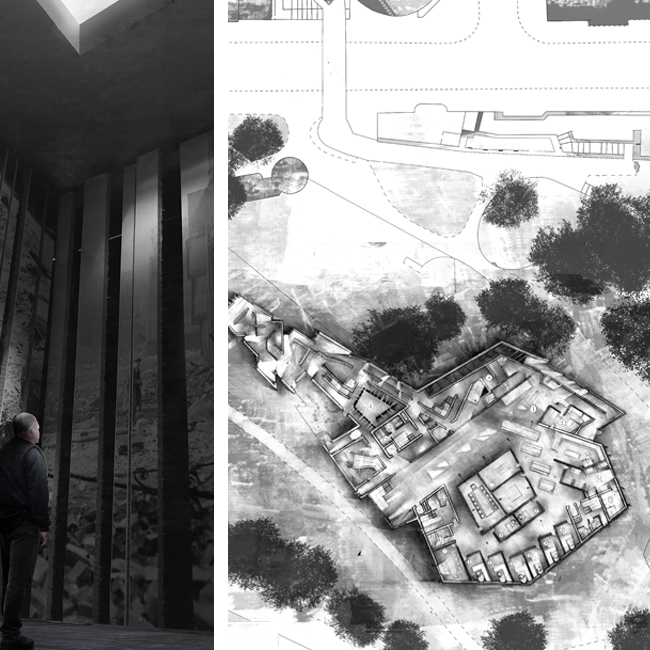
The second brief, “Urban cuts across media: Interfaces between matter, media and the city”, led by Dr Matthew Hynam, offered the students the opportunity to develop an architectural praxis that embraced a comprehensive understanding of media as a way to understanding the environments. The studio dwelled on the notion of the cut as a device that spans diverse media to draw out a deeper reading of the Athenian landscape between its tectonic and ethereal layers. The studio sought to develop an expanded representational language to combat the disjunction between architectural media and the increasing complexity and technification of the profession.
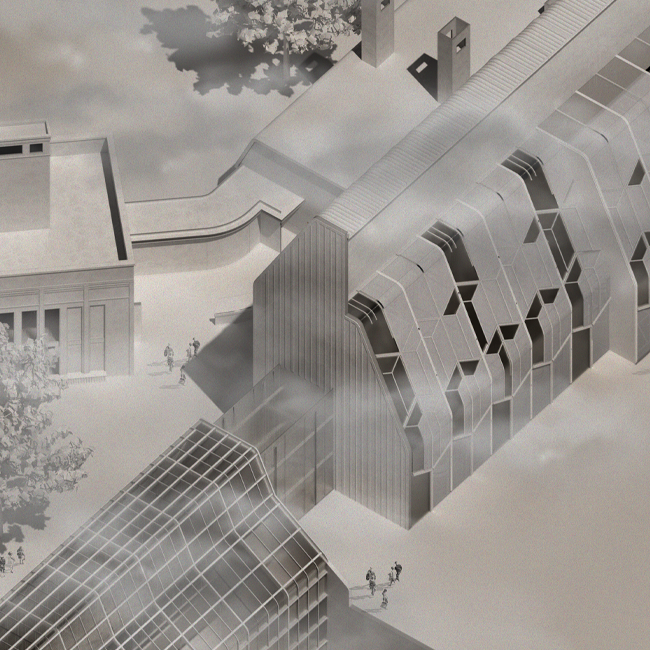
The third brief, Gods and Goddesses, Democrats and Republicans (and Badly Stuffed Cats), led by Jonathan Bassindale, focused on adaptive reuse. The brief questioned whether there was a problem to solve in the historical and archaeological Athens. The students engaged in arguments about restoration, from reconstruction to allowing natural decay, or by freezing the ruins in their current state. The studio sought to architecturally respond to how architects can be the instigators of positive change by avoiding a purely mathematical approach.
The design work was reinforced by the Future Practice module, which prepared students for the Part III course, and the Advanced Cultural Studies module, which invited students to articulate the theoretical and interdisciplinary considerations of their practice. The following pages represent a sample of their work.