

Life After Death
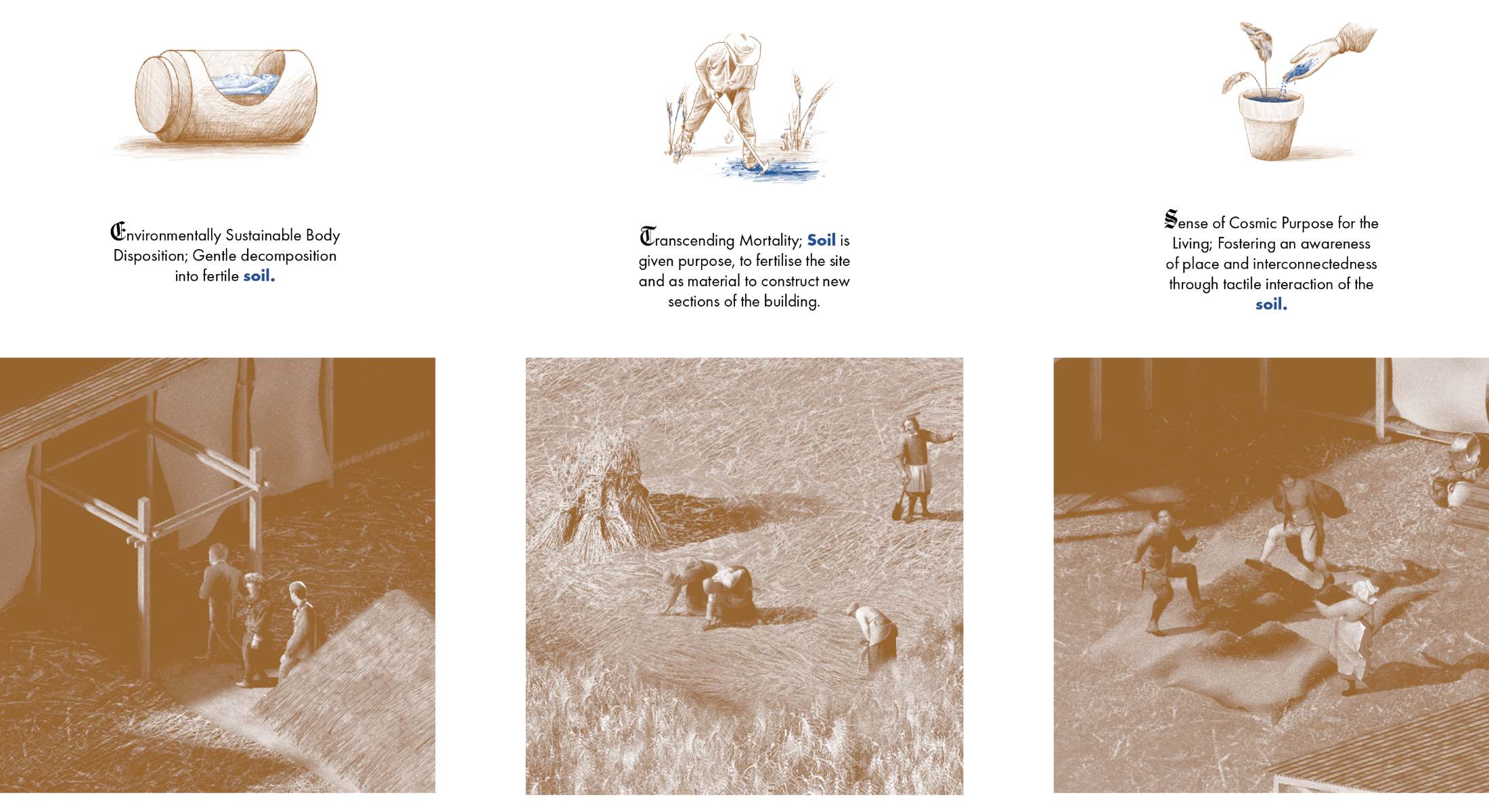
The scheme aims to reinterpret our approach towards death. Responding to cultural conventions that are seldom considered for reformation, resulting in unsustainable practices both environmentally and psychosocially.
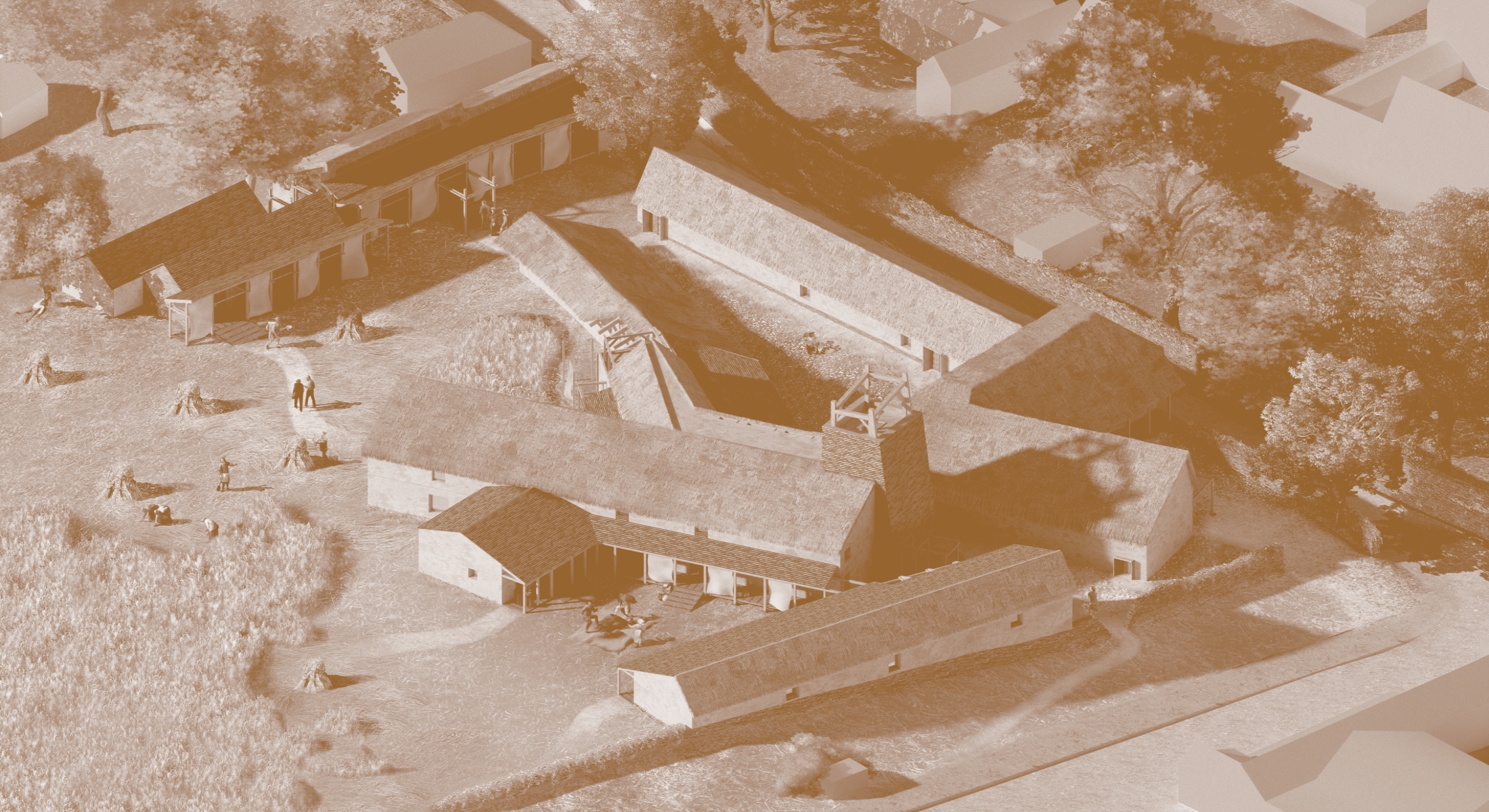
The scheme aims to reinterpret our approach towards death. Responding to cultural conventions that are seldom considered for reformation, resulting in unsustainable practices both environmentally and psychosocially.
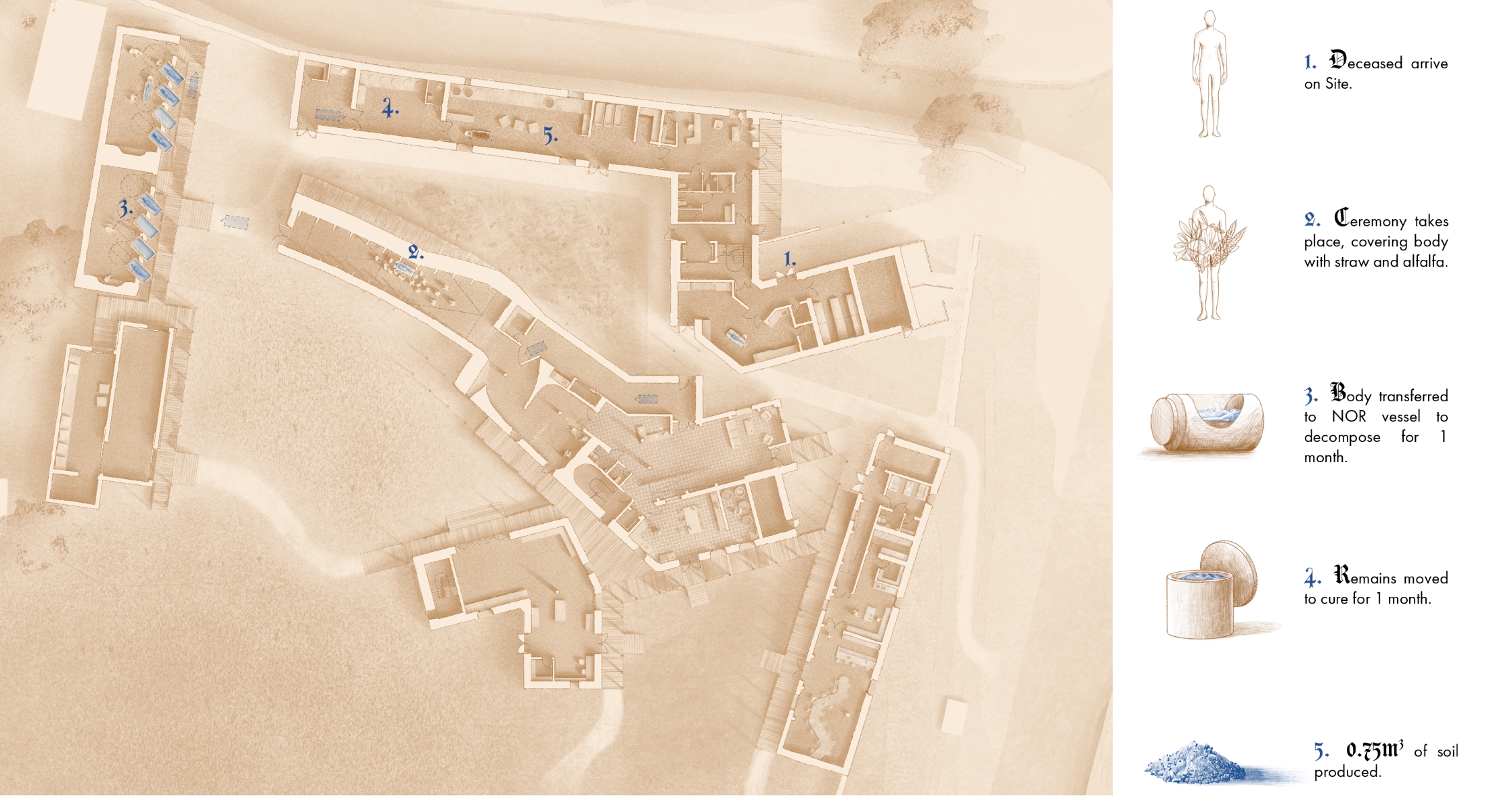
The diverging and converging journeys undertaken by the living and the deceased influence the form of the building. The NOR process; from solid form denaturing to soil, begins in isolation then conjoins with the living within the Ceremony Room.
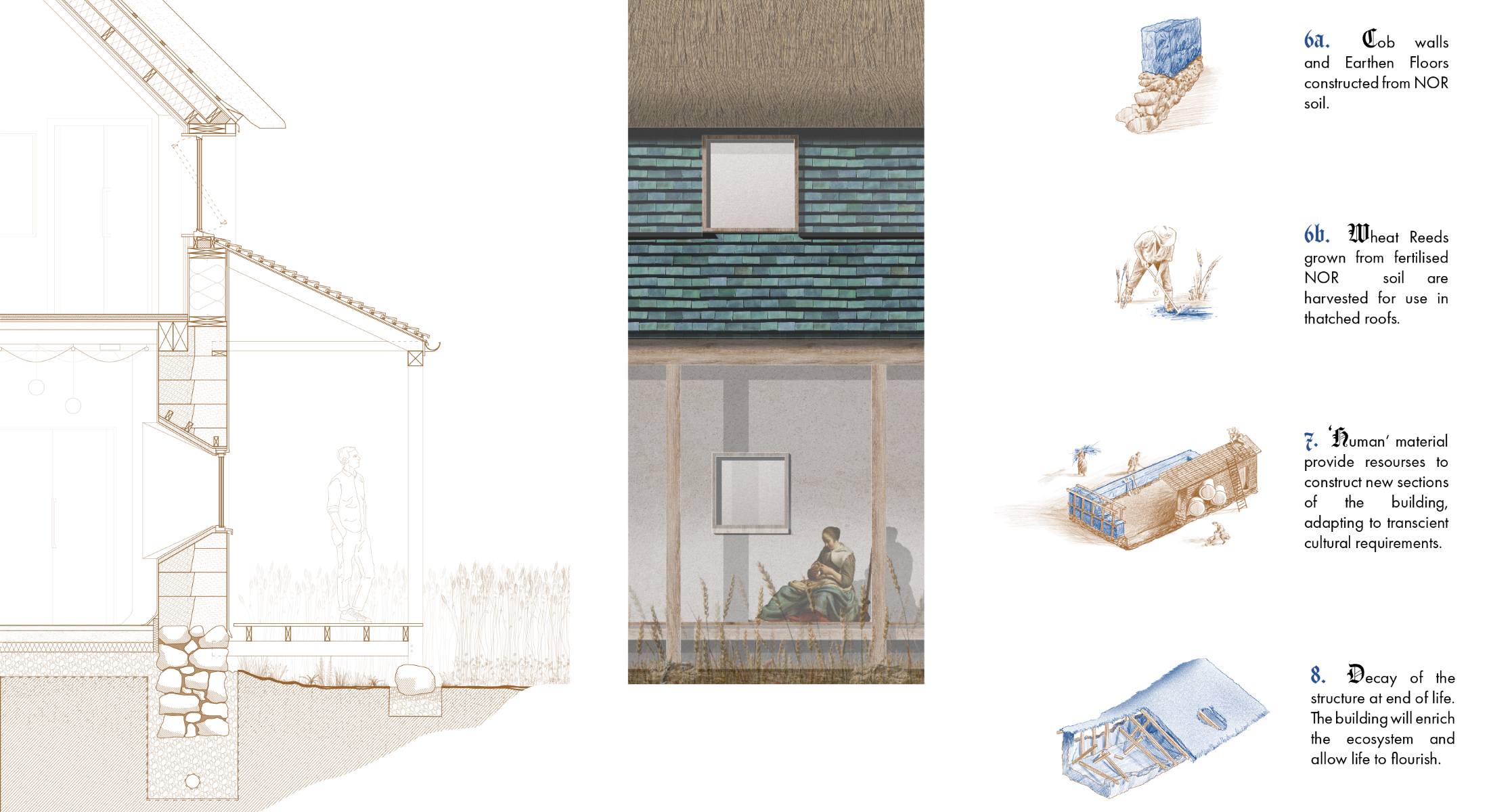
Current material lifespans are often dictated by monetary value, planned obsolescence emphasises profit over quality. NOR soil is used to grow the building and allow decay based on the requirements of the users, not for the capital gain of corporations.
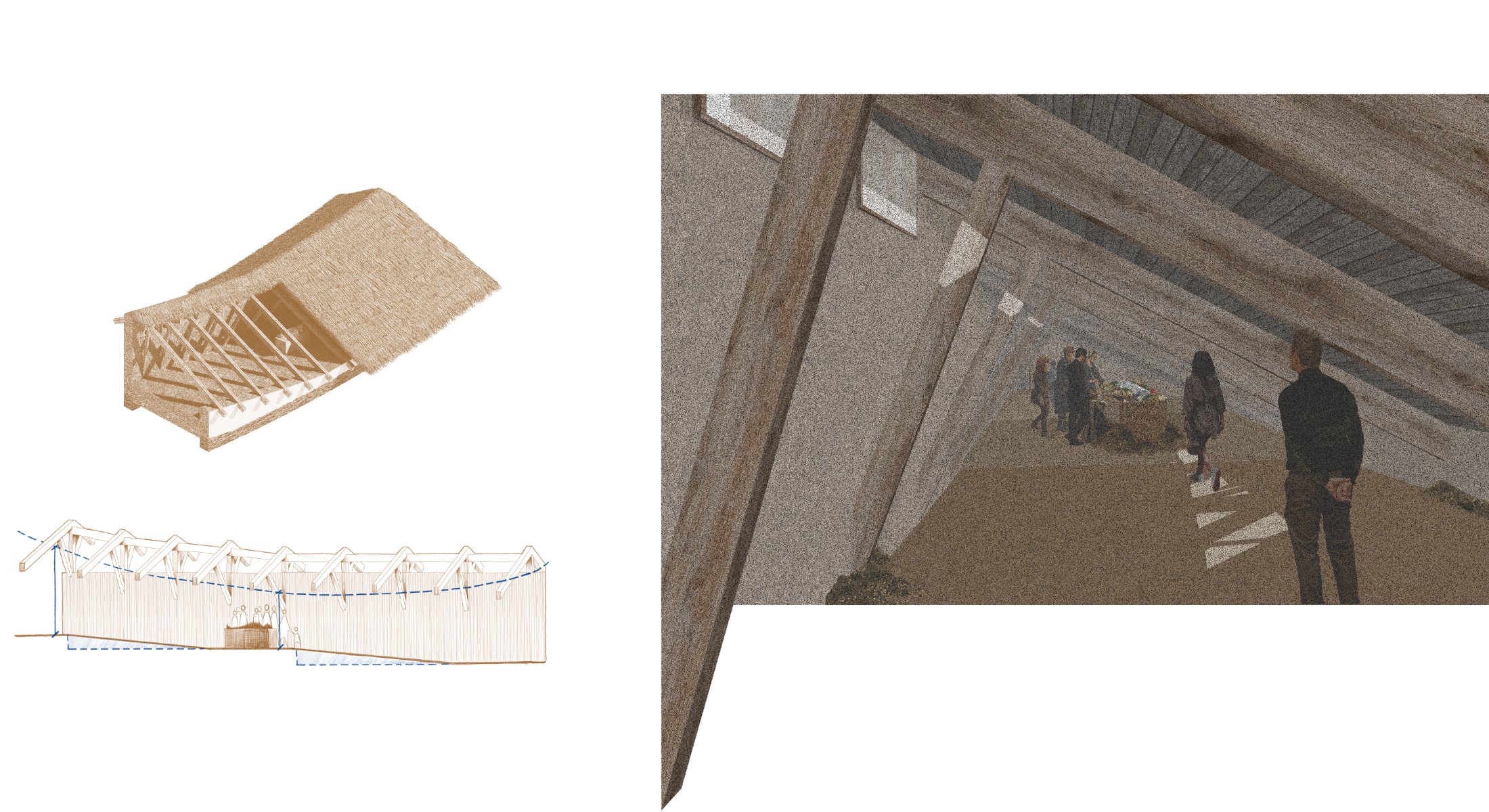
The crossing between living and deceased, an inflection of extreme contemplative significance. Mourners increase in proximity to the deceased, provoking intellectual reflection that linger beyond the confines of the ceremony room. Death is omnipresent, and we must face this fact.
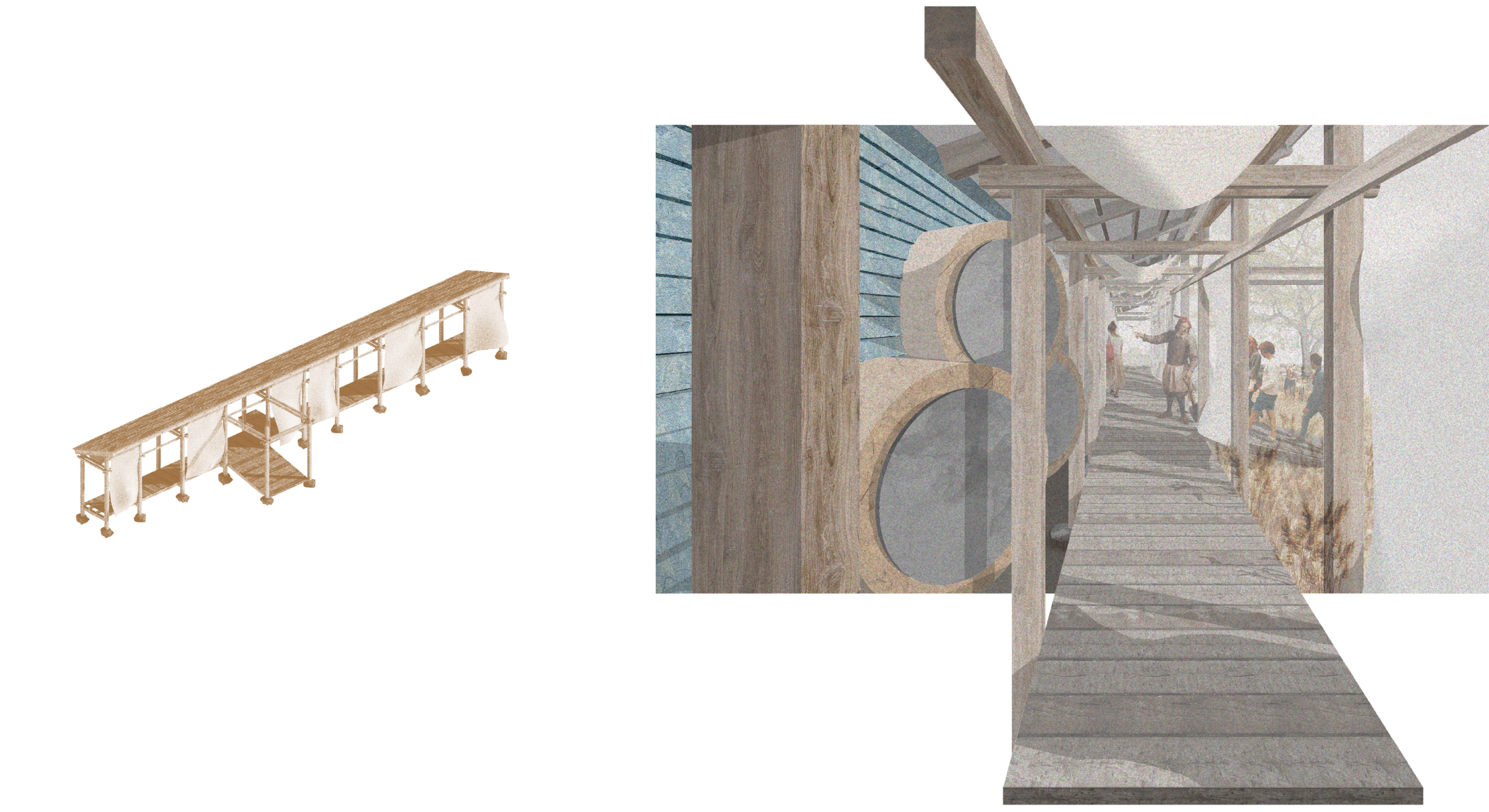
Transference from the Ceremony Room to the NOR Rooms is facilitated by elevated walkways, minimising ecosystem disturbance. Fabric provides shade and semi-private moments, the looseness of their form contrasts the heaviness of the Earth and soil, underscoring our ephemeral existence.
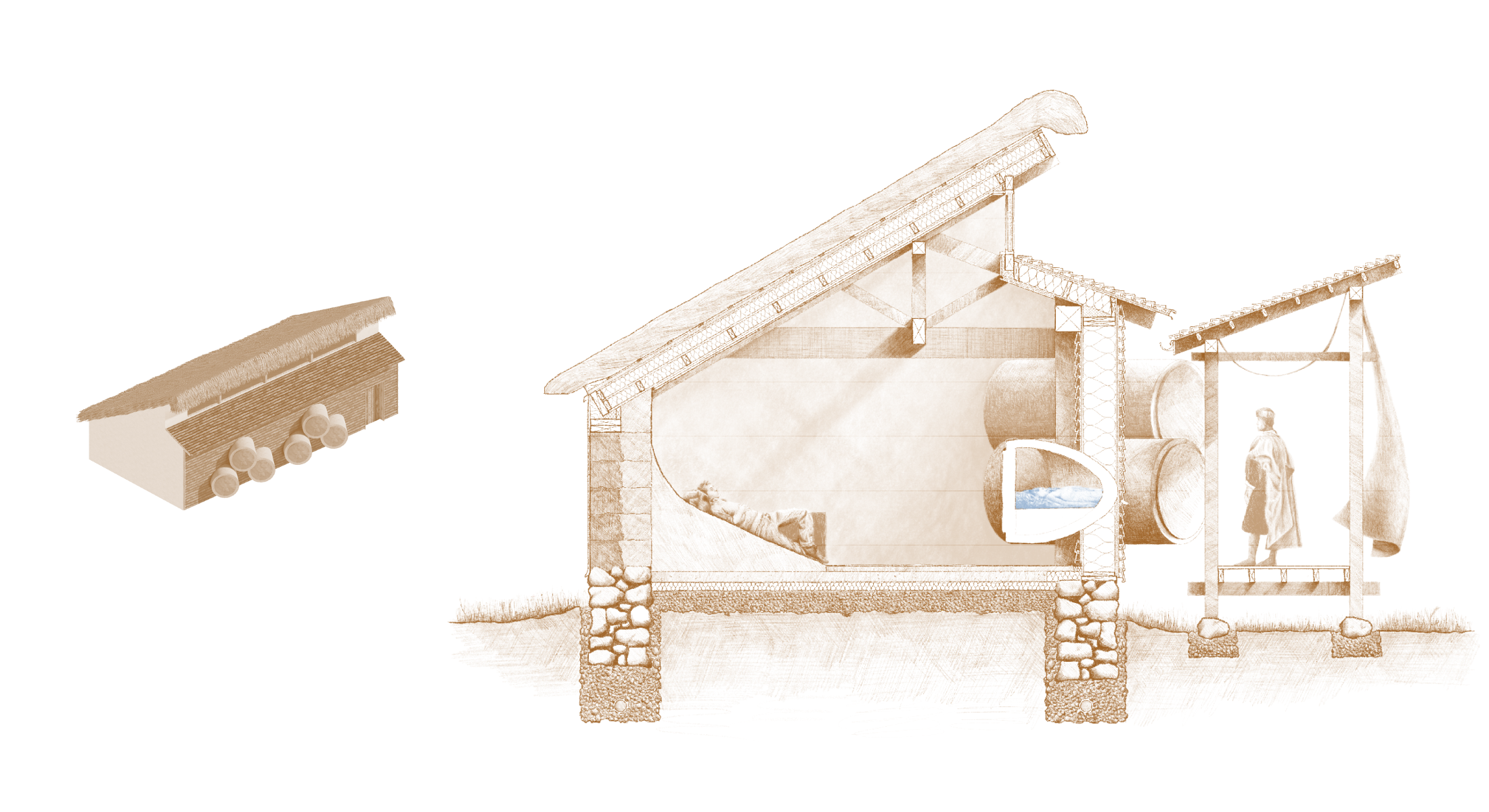
The deceased are placed in vessels to decompose. These spaces facilitate the return of mourners over the course of decomposition, the process is slower than cremation, realigning ideological priorities away from the immediate gratification induced by consumerist culture.