Tilly Pizza (*2004, Cambridge) is a multidisciplinary visual artist whose work explores the juxtaposition of the natural and the unnatural. Deeply influenced by the science fiction films of her childhood, she draws on cinematic tropes while maintaining a playful approach. Rather than using science fiction as a mere aesthetic reference or a form of escapism, she employs it as a critical lens through which to examine contemporary anxieties and possibilities.
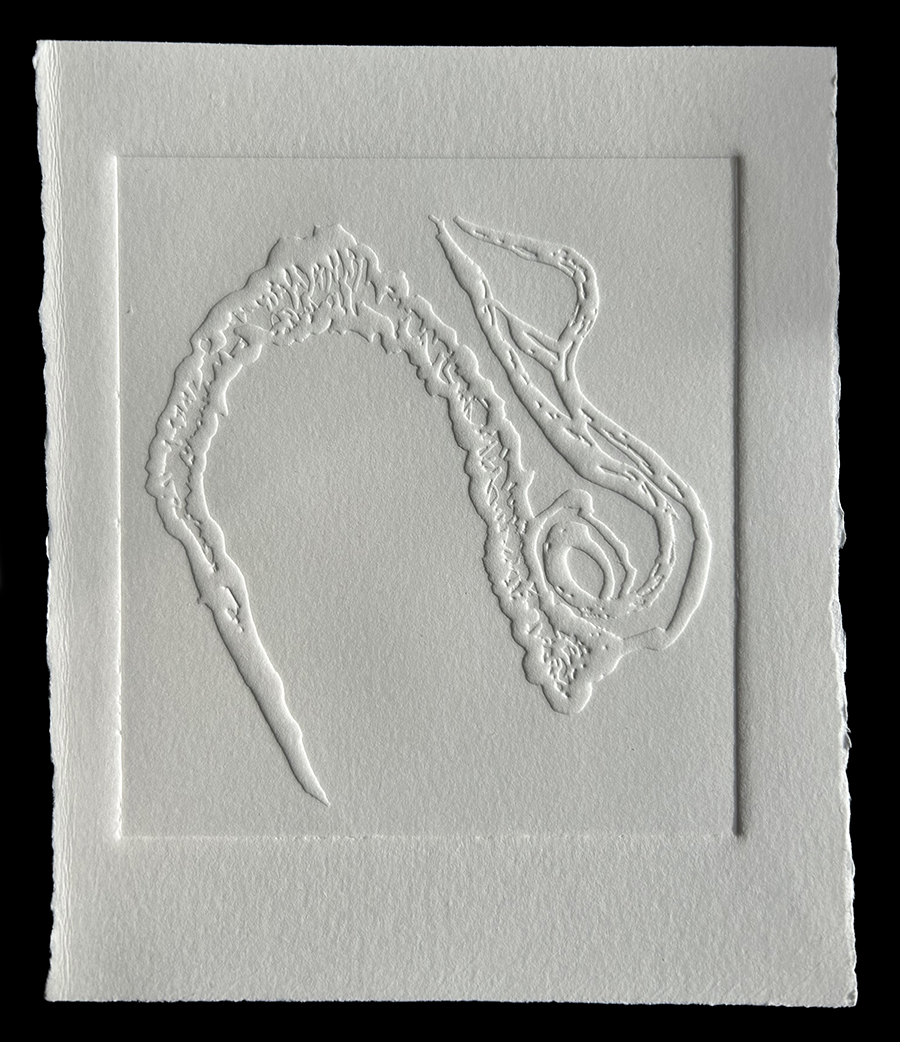
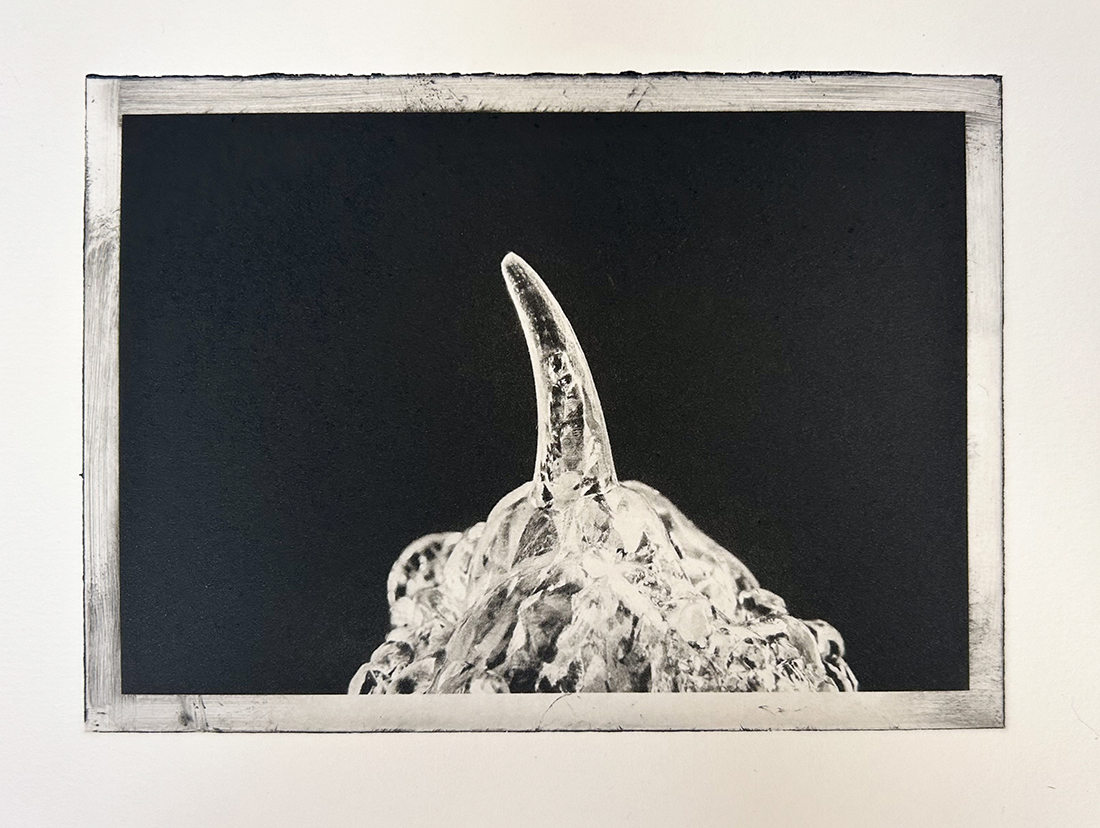
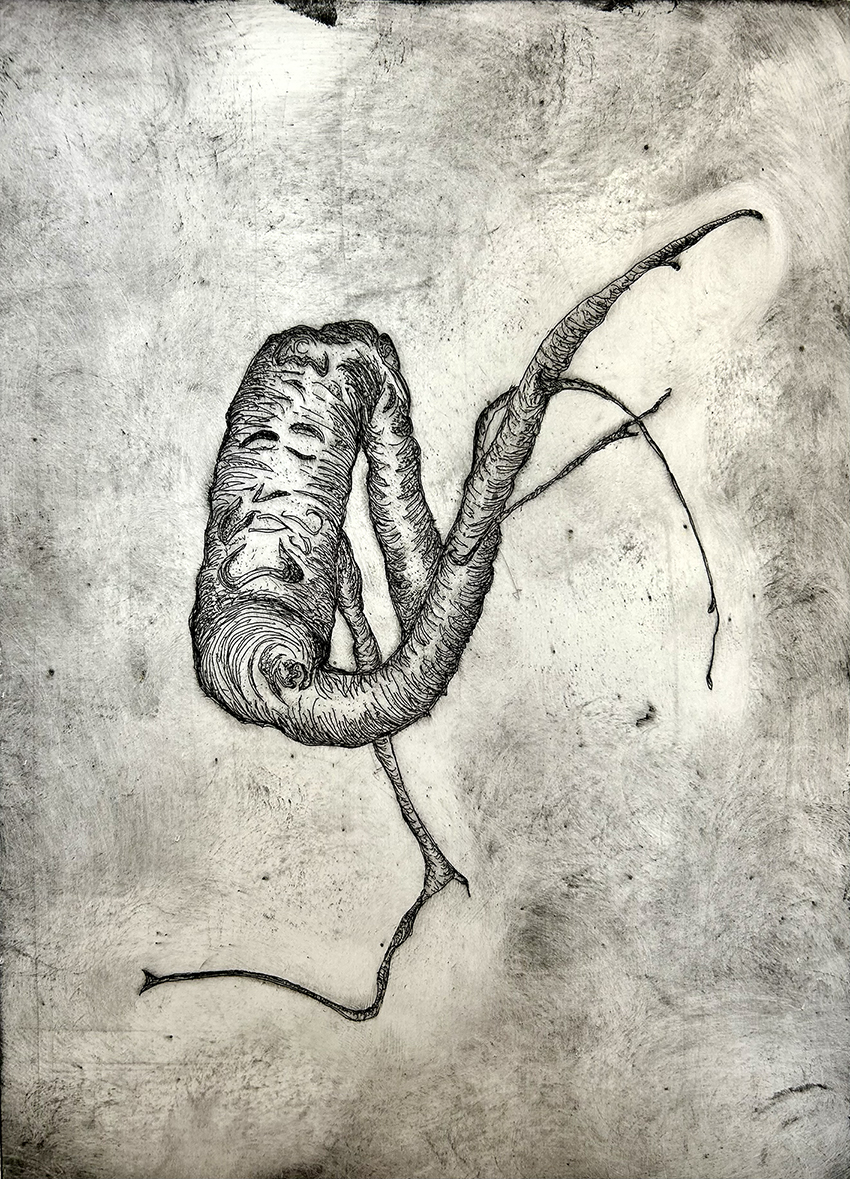
Tilly’s practice extends beyond traditional photography into a network of physical and digital media. During her UWE Study Abroad programme in Germany, she expanded her practice, incorporating 3D printing and metal casting into her work. Often adopting the role of a scientist, Tilly approaches art-making as a process of testing, investigation and discovery. Processes such as photograms, etching and embossing allow her to work freely and intuitively, reconnecting with the childlike instinct to learn through making and exploration.
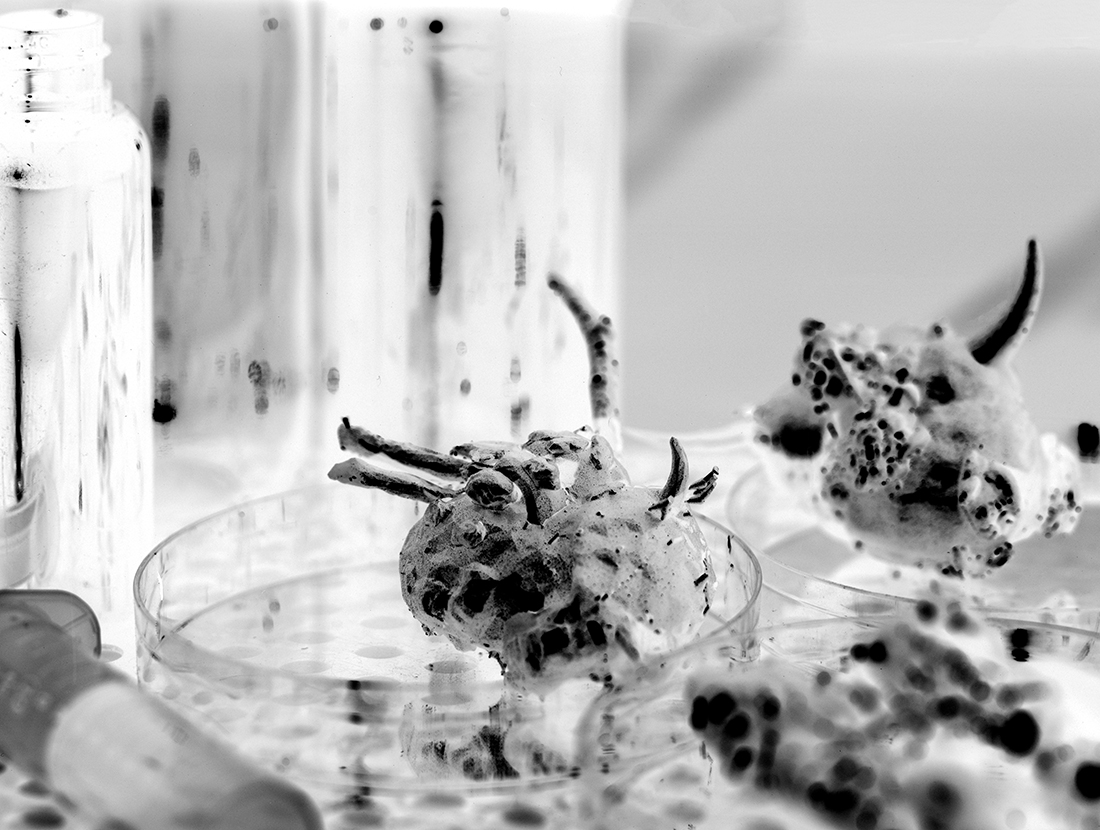
Tilly’s graduate project, ‘An Artificial Birth’, explores the future of ultra-processed foods through a speculative, science-fiction lens, combining photography, drawing, sculpture and installation. The fictional world is built around a lab-grown species designed and modelled in virtual reality.
The species’ metamorphosis unfolds across five pivotal stages. With the creation of these unsettling “specimens”, Tilly aims to blur the line between natural and artificial forms, and between science and art, while intentionally surrendering to the weird and the eerie.
Central to the project is the idea that artistic processes mirror the industrial transformation of whole foods into chemically altered products. Organic forms are manipulated and reconstructed through VR modelling, reflecting the breakdown, enhancement and reconstruction involved in ultra-processed foods.
In Tilly’s pseudo-scientific world, scientists obsessively use technology to transform food in pursuit of profit. As the specimens evolve, they become increasingly complex, uncontrollable and mutated.
Through storytelling and world-building, the project critiques profit-driven systems and the increasingly artificial direction of modern society.
In today’s digital climate, with the rise of AI-generated imagery and online misinformation, this fictional world invites audiences to question the ethics and consequences of food production, advertising, subliminal messaging and consumer culture.