Abuko Nature Reserve was the first Protected Area established in the Gambia in 1968. Covering only 106ha, over 270 bird species have been recorded at the reserve, underscoring its value for biodiversity and conservation.
Despite its preeminent history, the park has seen better days due to a lack of funding and resources. Multiple infrastructures and facilities lay in deteriorating condition. Daughters of Africa Foundation (DOAF) had been communicating with the management for several years to revitalize the park, with the plans to involve the UWE, Bristol architectural students confirmed during 2023’s Daigo7. Architecture students from Daigo8 are to produce a master plan to develop Abuko Nature Reserve into an ecotourism destination to give it a new lease on life. Two conservation students, one Graphic Arts student from UWE, and six architecture students from the Gambia University of Applied Science, Engineering and Technology (USET) were also part of the project.
The logo showcases Abuko’s prominence as a birdwatching destination and its biodiversity through the charismatic violet turaco, hyenas in the animal orphanage and endangered monkey species. The logo took inspiration from the Gambia’s National flag colours.
Abuko main entrance refurbishment
Increasing its visibility from the highway could put Abuko Nature Reserve back on the map. The team refurbished the entrance into something more attractive by repainting the main gate and fence. Attracting more visitors will provide income for future development.
Animal Orphanage Murals Proposal
Working with the architect students’ master plan, concept arts for murals on an existing café building at the animal orphanage was provided, to be executed by future Daigo teams with the resources.
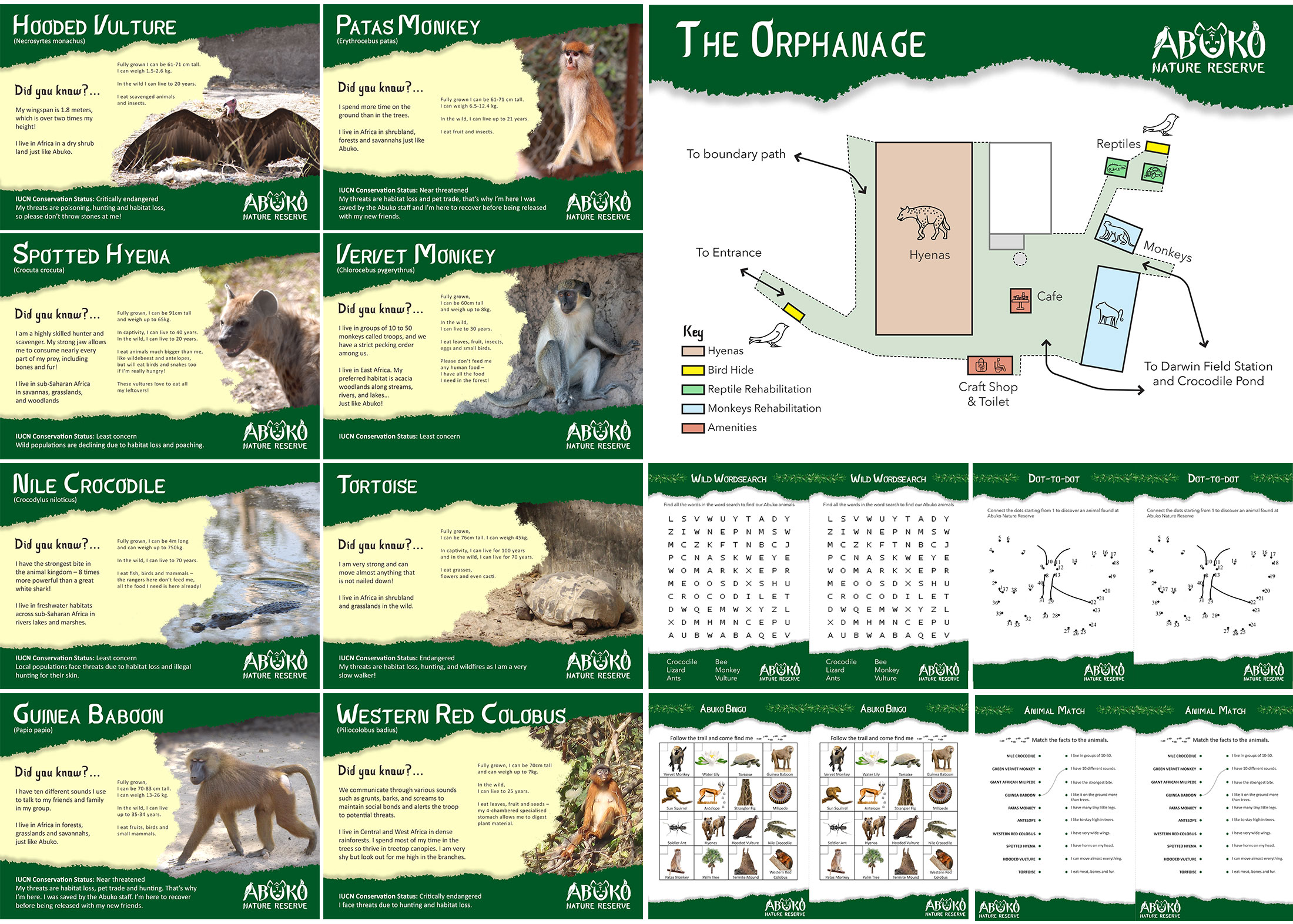
Signages and Printed Materials
The park lacks signage about the animals, especially in the animal orphanage area. Explanations currently rely on oral communication from the guides. The team provided some new signages and a map. Activity sheets could be distributed to visiting school children.