


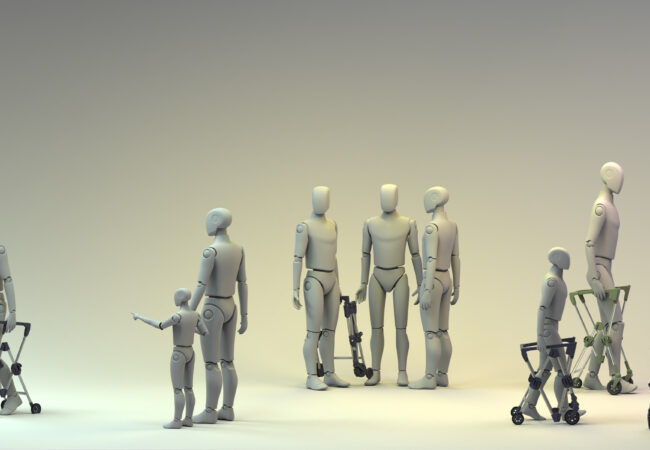
During my final year project, I wanted to learn about the problems faced by young people who require walkers for Cerebral Palsy. Through my research, I discovered a number of things:
• Walkers have not been designed for the individual user; there is a lack of adjustments available and children’s posture can be affected in the wait time for a new walker.
• Damaged walkers are often thrown away because they are difficult to repair. They do not fit into a system of reuse.
• Walkers come in a limited number of colors and are not designed with aesthetics in mind. They have been designed only for practicality and necessity. They are not purchased out of choice.
I decided on my vision: Every child living with Cerebral Palsy should be able to rely on adaptable assistive technology that reflects their needs and personality – with the chance to pass it on.
I have designed a walker that is both physically and emotionally durable, benefiting both the user and the environment using:
• Modular design
• Tailored sizing using Parametric CAD • Customizable features
• Adaptable components
This project wasn’t just about designing a better piece of assistive technology. It was about creating something that lasts— something that’s cherished, cared for, and ultimately, part of someone’s life story.


